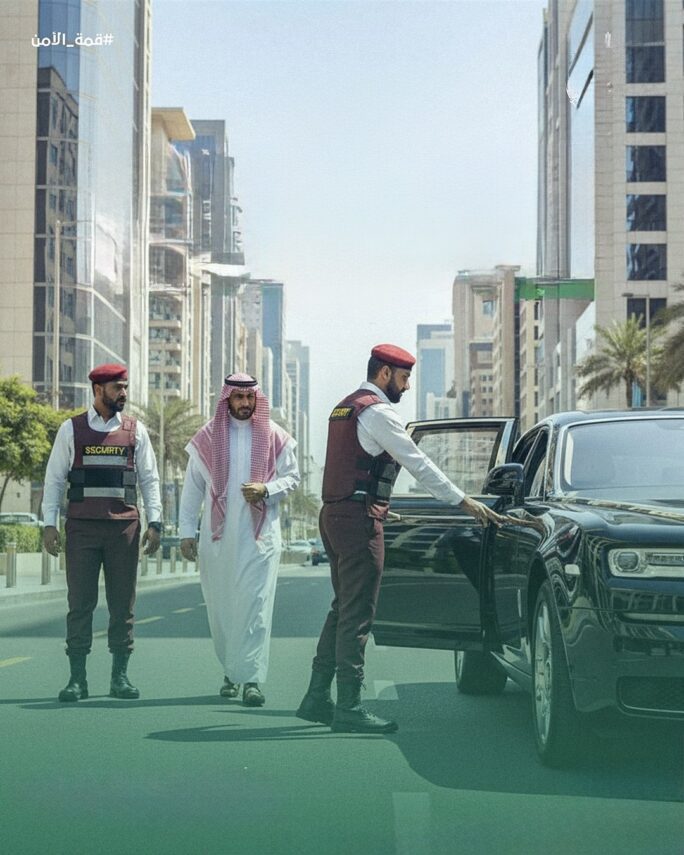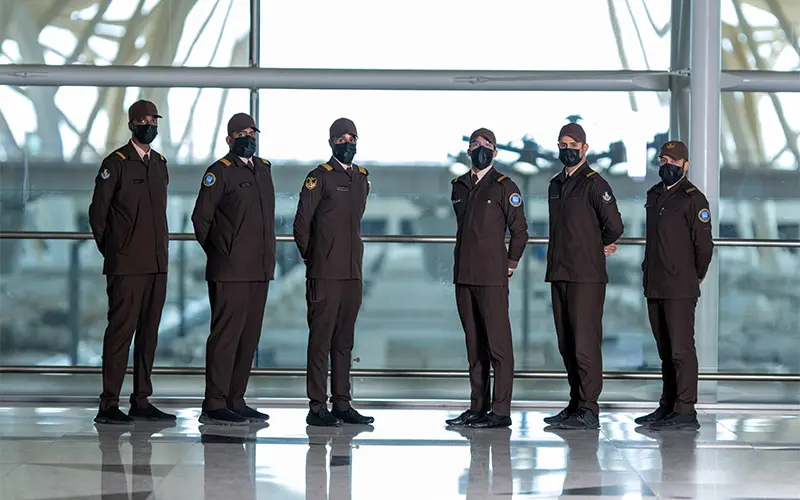
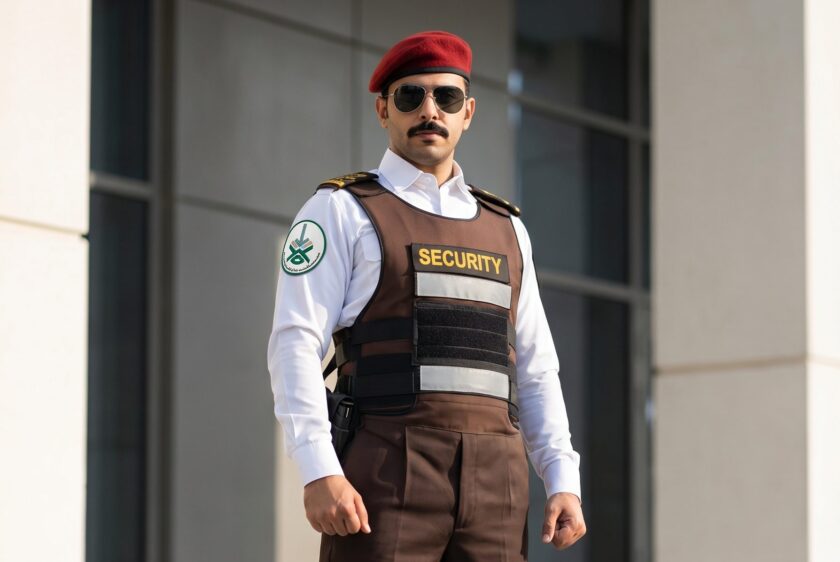
A practical guide for guards and HR managers: what the Labor Law guarantees, what the Ministry of Human Resources requires for guard work environments, and what the site must provide.
Key Takeaways
A security guard employed by a Saudi guarding company is covered by the Saudi Labor Law and all its rights. The main rights are a written contract documented on Qiwa, wages paid through the wage protection system, set working hours with breaks, weekly rest, paid annual leave, an end of service award, social insurance registration and a safe guard post.
- The Saudi Labor Law was amended by Royal Decree M/44 dated 8/2/1446H, and the amendments took effect on 19 February 2025.
- Security guard working hours in Saudi Arabia may not exceed 8 actual hours a day or 48 a week, falling to 6 a day in Ramadan for Muslim workers, and extra hours are paid at the hourly wage plus 50 percent.
- A security guard may not work more than 5 consecutive hours without a break of at least half an hour for rest, prayer and meals, with a relief guard covering the post.
- A security guard is entitled to at least 21 days of annual leave, rising to 30 days after 5 consecutive years with the same employer, with leave pay given in advance.
- In October 2022 the Ministry of Human Resources and Social Development issued work environment requirements for the guarding sector, dividing guard posts into indoor, outdoor and remote environments, each with set facilities.
What are the rights of a security guard in a company?
A security guard employed by a guarding company is a worker covered by the Saudi Labor Law and all its rights, plus guard sector requirements issued by the Ministry of Human Resources and Social Development. The main rights are a written, documented contract, wages paid through the wage protection system, set working hours with breaks, weekly rest and paid annual leave, an end of service award, social insurance registration, and a safe work environment at the guard post.
The Labor Law was amended by Royal Decree No. M/44 dated 8/2/1446H, and the amendments took effect on 19 February 2025, changing 38 articles, deleting 7 and adding 2. This guide does not cover salary levels, which have their own guide on our blog.
A written contract documented on Qiwa
After the amendments, the Labor Law requires the contract to be written in two copies and documented, and the ministry issues standard contract templates. Documentation is done on Qiwa: the employer uploads the contract data, and the guard can review it from his own account and accept, reject or ask for changes. The contract counts as documented only when both parties agree.
Points a guard should check in his contract
- The probation period cannot exceed 180 days in total after the amendments.
- In an open ended contract with monthly pay, notice is 30 days from the worker and 60 days from the employer.
- Resignation is made in writing, and the worker may withdraw it within 7 days while keeping his rights.
- The law now requires the employer to provide suitable housing and transport, or a cash allowance instead.
Wages and wage protection through Mudad
Employers upload their payroll file through the Mudad platform under the wage protection programme. The file is matched against social insurance records and the compliance rate of the employer is updated. When the employer justifies a flagged wage issue, the guard can accept or reject that justification from his Mudad account.
The law requires wages to be paid on the agreed date, in the official currency and through approved banks, and deductions may not exceed half the wage except in defined cases. Overtime is paid at the hourly wage plus 50 percent, and with the consent of the worker it can be replaced with paid days off.
Working hours, breaks and weekly rest
Shift based guarding does not cancel the limits on working hours. These are the main rules that apply to a security guard:
- Actual working hours may not exceed 8 hours a day on a daily basis, or 48 hours a week on a weekly basis.
- In Ramadan, hours for Muslim workers are reduced to 6 a day or 36 a week.
- A guard may not work more than 5 consecutive hours without a break of at least half an hour for rest, prayer and meals, with a relief guard covering the post during it.
- Time spent at the workplace may not exceed 12 hours a day.
- The worker has a weekly rest of at least 24 consecutive hours, normally on Friday, though another day may be set. It may not be replaced with cash.
Hours beyond the approved standard count as overtime, as do hours worked on public holidays and Eid days.
Leave and the end of service award
Annual and special leave
- Annual leave of at least 21 days, rising to 30 days after 5 consecutive years with the same employer, with leave pay given in advance.
- Leave cannot be waived or cashed in during employment, and unused days are paid when employment ends.
- Paid leave of 5 days for marriage or the death of a spouse, parent or child, 3 days for the death of a sibling, and 3 days for the birth of a child.
End of service award
When employment ends, the worker is owed half a month of pay for each of the first five years and a full month for each year after that, based on the last wage. On resignation, he receives one third of the award for two to under five years of service, two thirds for five to under ten years, and nothing for under two years.
Social insurance and occupational safety
The employer must register the guard with social insurance from the first day of work, and monthly contributions are split between the worker and the employer. Coverage includes the annuities branch, the occupational hazards branch that pays for treatment and compensation for work injuries, and SANED for involuntary unemployment. Every guard should check that his registration start date matches his actual start date, and pressuring a worker not to register is a breach of the law.
On occupational safety, the employer must explain the job hazards to the guard before he starts, provide suitable personal protective equipment and train him to use it without deducting anything from his wage, keep a first aid kit, and treat work injuries at the cost of the employer.
Requirements specific to the guarding sector
Alongside the Labor Law, the Private Civil Security Guarding Law sets rules that apply directly to guards: all guards must be Saudi, the company must train and qualify them, they must wear the uniform the company sets, and each guard must hold a civilian security guard licence renewed every year. In October 2022, the Ministry of Human Resources also issued work environment requirements for the guarding sector, dividing guard posts into three environments:
- Indoor posts such as malls and banks: a chair and desk, a locker for personal items, first aid supplies, air conditioning, and access to a prayer area and toilet, which may be the mall facilities.
- Outdoor posts: a guard room with a lockable door, window, air conditioning, refrigerator, drinking water, lighting, locker, fire extinguisher and a means of communication, at least 2.5 by 2.5 metres for one or two guards.
- Remote posts such as project sites far from cities: all outdoor requirements plus occupational safety and health rules, and a guard may not work alone on his shift.
- The employer must provide guards with their uniform.
The client site role: heat, shade and water
The legal duty sits with the company that employs the guard, but the guard actually works inside the client site, so these rights only work with clear coordination written into the contract. The most important things a guard needs from the site during the Saudi summer are:
- Compliance with the midday outdoor work ban, which in 2026 ran from 15 June to 15 September, from 12 noon to 3 pm, across all private sector establishments.
- No guard posted in an exposed spot during the ban hours unless he has a sunshade, as the guard work environment rules state.
- Drinking water and shaded rest areas, monitoring of guard health during high temperatures, and awareness of heat stress risks.
- Space for an air conditioned guard room or a suitable spot inside the building, with a toilet and prayer area close to the post.
Breaches of the midday work ban can be reported on the Ministry of Human Resources unified number 19911 or through the ministry app.
How Qimah Security Guards treats its guards
At Qimah Security Guards, we believe a guard who is settled and respected at work is better able to protect your site. We document the contracts of our guards, pay wages through official channels, register guards with social insurance, plan shifts around working hour limits and breaks, train guards before and during deployment, follow up on post conditions through field supervision, and coordinate with clients on a proper work environment, including shade and water in summer.
This guide is general information, not legal advice. Check the official text of the Labor Law and its regulations on the Ministry of Human Resources and Social Development website and at the Bureau of Experts at the Council of Ministers.
Frequently asked questions about security guard rights
How many hours a day does a security guard work in Saudi Arabia?
The legal limit is 8 actual working hours a day or 48 a week, and 6 a day in Ramadan for Muslim workers. Anything above that is overtime, paid at the hourly wage plus 50 percent.
Is a security guard entitled to a break during the shift?
Yes. A guard may not work more than 5 consecutive hours without a break of at least half an hour for rest, prayer and meals, and a relief guard must cover the post during it.
Is a security guard covered by social insurance?
Yes. The employer must register the guard with social insurance from his start date, and the guard can check his registration and its date through GOSI services.
How much annual leave does a security guard get?
At least 21 days a year, rising to 30 days after 5 consecutive years with the same employer, with leave pay given in advance.
What must a guard room provide?
Under the guarding sector work environment requirements, an outdoor guard room needs a lockable door, window, air conditioning, refrigerator, drinking water, lighting, locker, fire extinguisher, a means of communication, a desk and chair for each guard, and a toilet nearby.
How can a guard confirm his contract is documented?
The guard logs in to his Qiwa account to review the contract data and accept, reject or request changes. The contract counts as documented only after both parties agree.
Related Reading
- Security guard salary guide for Saudi Arabia
- How to become a security guard in Saudi Arabia
- Security guard training and licensing
- Managing security guards from the client side
- Rules private security guards must follow
- Female security guard services
- Private security services law and its amendments
- How we train our security guards
Looking for a guarding company that respects its guards?
A settled guard means better protection for your site. Call or WhatsApp Qimah Security Guards on +966 53 426 1698 to discuss your site needs.