A practical guide for hosts on the role of guards and female guards, from the gate until the last guest leaves.
Key Takeaways
To hire security for a wedding or private party in Saudi Arabia, contract a licensed security company that assigns trained Saudi guards, not an informal arrangement with an individual. The usual setup is a guard at the men entrance, female guards at the women entrance, and agreed rules on invitations, guest lists and phones that protect guest privacy.
- Most weddings in Saudi Arabia are held in two separate sections, and a male guard does not stand at the women entrance or enter the women section, a role that belongs to trained Saudi female guards.
- The host sets the phone and photography rules at a private occasion, and female guards apply them with guest consent as an entry condition, without confiscating, deleting or using force.
- The amendment to Article 2 of the Executive Regulations published in May 2025 lists wedding and event halls among the sites that must have guards during operating hours, while istirahat and private homes are not on that list.
- Weddings in Saudi Arabia usually start after Isha prayer and often run past midnight, so the contract sets the team arrival before the first guest and ends the duty after the last female guest leaves.
- Qimah Security Guards provides unarmed civilian guards who do not offer personal protection or escort services, and in an emergency the team calls the authorities or Civil Defense on 998.
What You Get When You Hire Security for a Wedding or Private Party
If you are preparing a wedding, a milka, a graduation party or a family dinner and want to hire a security guard for the party, what you usually need is not a show of force but a well run door: a guard at the men entrance, female guards at the women entrance, and someone who knows who is invited and who is not, and who protects guest privacy until the last car leaves. The right way to get this is a contract with a licensed security company that assigns trained Saudi guards, not an informal arrangement with an individual.
This guide is written for the host and the family. Commercial company events and exhibitions have their own service pages, and working out the number of guards has its own article that we point you to.
Each Private Occasion Needs a Different Setup
The door plan changes with the venue and the guests. These are the main cases we plan for:
- Wedding halls and palaces: usually two separate entrances for men and women and a hall security crew, so your team works alongside it on the guest gates and the women section.
- Istirahat: long walls, several gates, open sand parking and sometimes weak lighting at the edges, so you need a static guard at the gate and patrols along the wall.
- Milka and engagement at home: fewer guests and more privacy, with the focus on the house door, the men majlis and the separate women entrance.
- Graduation parties: female relatives and friends arriving close together, with close attention to stopping photography.
- Family celebrations and large gatherings: events that run for hours with guests coming and going, so parking order and protecting the inner doors of the house matter most.
- Private corporate dinners: a fixed guest list at a villa or a private room in a restaurant, where you need a calm, formally presented guard who checks names and guides guests.
Men and Women Sections: Guards at One Door, Female Guards at the Other
Most weddings in the Kingdom are held in two separate sections, each with its own entrance and team. A male guard does not stand at the women entrance or enter the women section. That role belongs to trained Saudi female guards who understand the occasion and deal with female guests politely and respectfully.
What Female Guards Do at the Women Entrance
- Receive female guests and check invitation cards or names as the family decides.
- Apply the phone and photography instructions the host asks for, and take in and return deposited items at exit.
- Keep the bride zaffa route clear and stop people standing in it before it starts.
- Contact the team supervisor on the men side whenever a situation needs a decision from the family.
What Guards Do at the Men Entrance
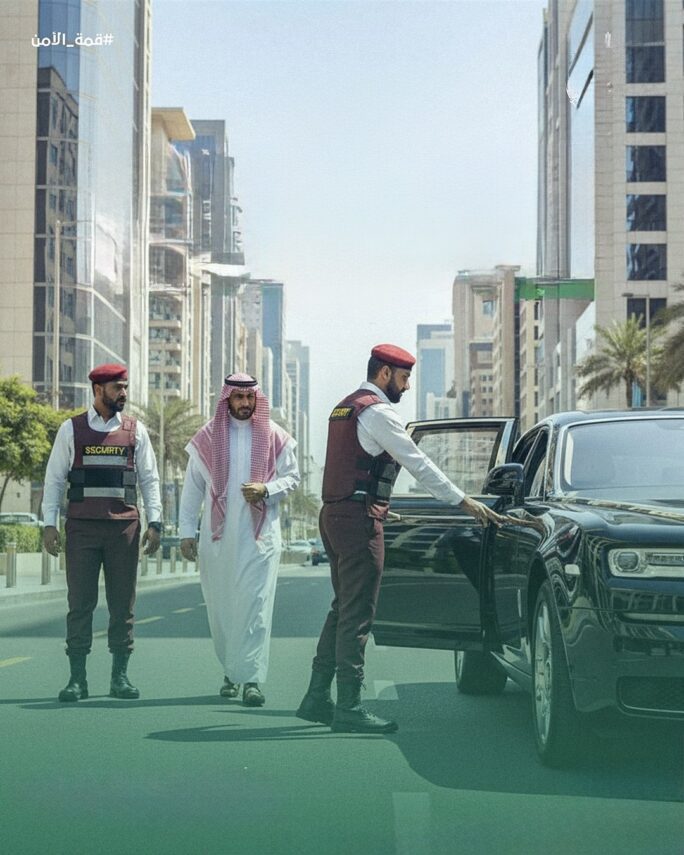
The guard at the men entrance welcomes guests and directs them to the majlis, deals calmly with anyone who arrives without an invitation, and refers any disputed case to the host or the person the host names instead of deciding alone.
Invitation Cards, Guest Lists and Phone Rules
Many families print a line on the invitation card that bans photography or asks guests to leave their phones, a common social custom at weddings and women graduation parties that protects the privacy of female guests. Female guards do not make this rule. They apply what the host decides, which is why we agree the details with you before the occasion.
What We Agree Before the Occasion
- How entry is checked: a paper card, a digital code or a name list held by the guard.
- The phone policy: a full ban with phones kept in numbered deposit, phones allowed with no photography, or a sticker over the camera.
- Exceptions: who may keep a phone or take photos, such as the booked photographer or the mother of the bride, and who has the authority to grant them.
- A guest not on the list: a short wait at the entrance until the guard reaches a named family member.
Checks at a private occasion happen with the guest consent, as an entry condition set by the host, not as a power held by the guard. A guest who refuses to leave a phone is not forced, and the matter goes to the host to decide. For the legal limits of searches, see our article on whether a security guard can search you.
Parking, Valet and the Arrival and Departure Flow
The first thing guests see is the parking, and the busiest moments are when guests arrive close together and when everyone leaves after dinner or after the zaffa. If the hall offers valet parking, it is the hall service, and our guards work with its operator, not instead of it.
- Separate the family drop off point at the women entrance from the men entrance so families do not wait in the car lane.
- Keep the emergency lane and Civil Defense exits clear all night.
- Reserve the route and the parking spot for the bride and groom car and keep random parking away from it.
- At istirahat: mark the parking area with enough lighting and a guard watching it, since cars are often parked outside the wall.
Late Night Weddings: Timings and Shifts
Weddings in Saudi Arabia usually start after Isha prayer and often run past midnight, and the women section can finish hours after the men side because of the zaffa and dinner. So the contract sets the team arrival well before the first guest, with time to walk the venue, and ends the duty after the last female guest leaves.
- Agree possible extra hours in advance instead of negotiating at midnight.
- Assign female guards to the exit and the return of deposited items, the busiest moment in the women section.
- In the summer holiday wedding season, book early because demand for female guards rises.
What Saudi Rules Say About Guarding Private Occasions
Private guarding in the Kingdom rests on the Private Civil Security Guard Law issued by Royal Decree M/24 dated 8/7/1426H and its Executive Regulations. What matters most to a host is that only a licensed entity may provide guarding services and that staff of security companies must be Saudi. An individual working outside this framework gives you no accountable party.
In May 2025 the Umm Al-Qura gazette published an amendment to Article 2 of the Executive Regulations, and wedding and event halls appear among the sites that must have private security guards during their operating hours. This means a licensed hall normally has its own guards, and your additional team focuses on your guests, the women entrance and your own instructions. Istirahat and private homes are not on that list, so guarding there is a decision for the host.
On photography, the Anti-Cyber Crime Law treats invasion of private life through misuse of camera equipped mobile phones as a punishable offence, which is why many families are strict about phones. The female guard role is preventive: apply the host instructions and tell the host straight away if she sees someone filming, without confiscating, deleting or using force. Any complaint is a matter for the official authorities.
What to Prepare Before You Call, and What the Service Does Not Include
The clearer your information, the more accurate the guarding plan. Prepare these details before you ask for a quote:
- The type of occasion, its date, and the start and expected end time of each section.
- The hall name or the istiraha or home location, and the number of entrances and gates.
- The approximate number of guests in the men section and in the women section, separately.
- The invitation method, the phone and photography policy, and the exceptions.
- The name and number of a family member who makes decisions on the night.
To be clear: our guards are unarmed civilian guards, we do not offer personal protection or escort services, and we do not publish fixed prices because every occasion differs in entrances, hours and the number of female guards. In an emergency, the team calls the authorities or Civil Defense on 998.
Common Questions About Security for Weddings and Private Parties
Do I need my own security if the wedding hall already has guards?
Not always. Wedding halls must have guards during operating hours, but those guards serve the hall in general. Many families add female guards for the women entrance to check cards and apply phone rules.
Can I book female guards for the women section only?
Yes. You can book female guards for the women section only, and booking early in the wedding season is best.
Will the female guard check the phones of female guests?
The female guard applies what the host decides, such as taking phones into numbered deposit or making sure no one films, with the guest consent as a condition of entry. A guest who refuses is referred to the family.
Do you provide a guard for an istiraha or a party at home?
Yes. We provide a guard for the gate and patrols of the wall and parking, with female guards when needed, in more than 25 Saudi cities.
Can the guards escort the groom or the bride personally?
Our guards are unarmed civilian guards who run the doors, the parking and the sections. We do not provide personal protection or escort services.
What happens if an uninvited guest arrives?
The guard greets him politely, asks him to wait and contacts the named family member to decide, with no argument at the door.
Related Reading
- event and VIP security services
- how many security guards your event needs
- security guards for exhibitions and events
- female security guard services
- access control and gate management
- can a security guard search you
- How to hire security guards in Saudi Arabia
- Security guard uniform in Saudi Arabia
Request a Security Plan for Your Occasion
Send your occasion details to Qimah Security Guards by phone or WhatsApp on +966 53 426 1698, or through the quote page, and we will propose a plan for the men and women sections that fits the hall, istiraha or home, with a site visit when needed.