Perimeter security in Saudi Arabia is the outer protection layer of a commercial or industrial site: fences, gates, lighting, clear zones and vehicle barriers that deter and delay intruders, plus cameras and trained guards who detect a breach and respond to it. At HCIS regulated plants, the design must also follow the HCIS security directives.
Key Takeaways
- A well designed site perimeter performs four linked functions, deter, detect, delay and respond, and a perimeter that lacks any one of them leaves a predictable gap.
- A fence alone does not stop a determined intruder, but it buys time for guards and cameras to detect them before they reach the assets.
- Drifting sand against fences, dust on lenses and summer heat are Saudi conditions that call for a perimeter check after every dust event.
- The High Commission for Industrial Security (HCIS) issues security directives covering fencing, gates and security lighting for the facilities it supervises, and that design work is handled by HCIS approved consultants.
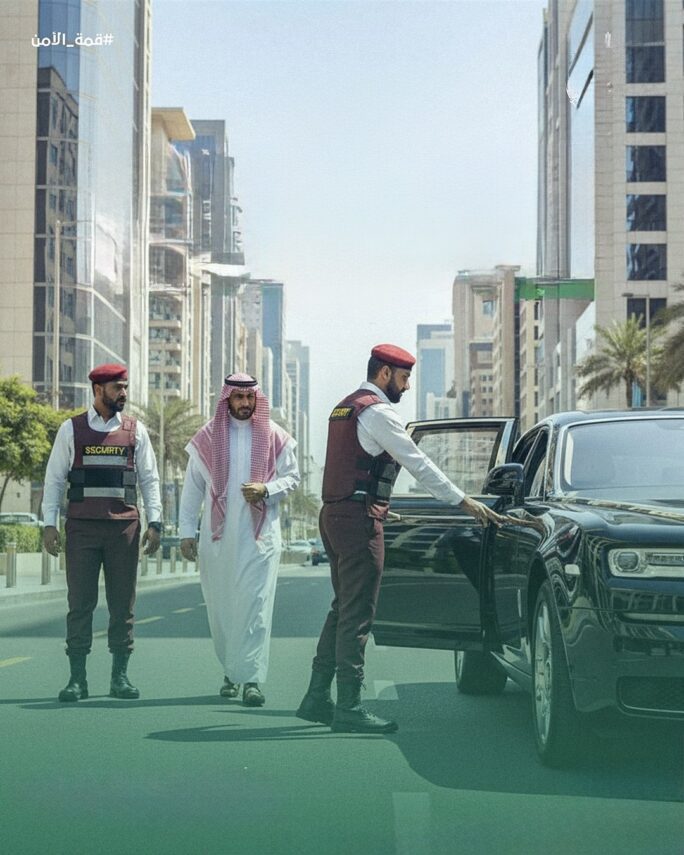
- Qimah Security Guards delivers the human side of perimeter security, meaning gate posts, fence patrols and the client camera room, and does not install fences or cameras.
What Is Perimeter Security and What Must It Achieve
Perimeter security is the set of physical barriers, procedures and people that protect the outer boundary of a site, from the fence and the gate to the open ground just inside them. It is the first point where an intruder meets the site, so it decides how much work everything behind it has to do.
Deter
An intact fence, a staffed gate and working lights tell anyone watching the site that it is actively managed, so they back off before trying.
Detect
The perimeter must produce a signal when breached, from a guard on patrol, a camera watched by an operator, or visible cutting or climbing damage.
Delay
The value of a fence is the time an intruder needs to cross it. The longer it takes, the better the chance of detection before the assets are reached.
Respond
Response means a guard reaching the spot, a supervisor making the call, and a report to the police on 911 or Civil Defense on 998 when needed.
Which Physical Elements Make Up a Strong Perimeter
A strong perimeter combines a continuous barrier, few entry points, lighting without dark spots and open ground, specified for the risk of the site.
- Fences and walls: a consistent height with no gaps, a secured base that prevents crawling underneath, and anti climb features at higher risk sites.
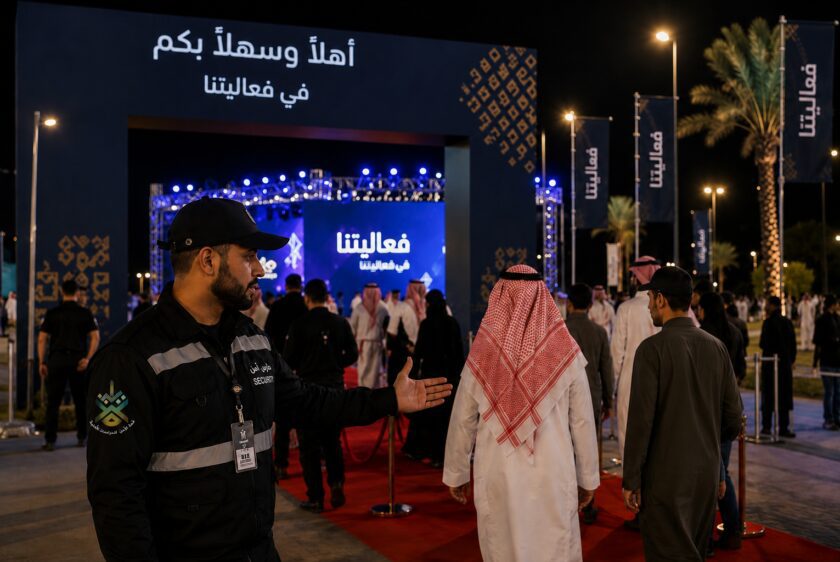
- Gates: as few entry points as possible, with every gate either staffed by a guard during operating hours or closed, locked and checked by patrols.
- Security lighting: coverage of the full fence line, aimed outward so an intruder is lit while the guard is not dazzled.
- Clear zones: a strip on both sides of the fence kept free of vehicles, containers, plants and debris, so an intruder finds neither cover nor a ladder.
- Vehicle barriers: fixed or rising barriers at critical entrances that keep a safe stand off distance from operating buildings.
Where Do Cameras and Sensors Fit, and Who Watches Them
Cameras and fence sensors extend detection along a long perimeter where a patrol cannot be at every point at every moment, but their value depends on who watches the screen and who moves when an alert comes in.
The client supplies and installs these systems through a specialist contractor. Qimah Security Guards provides trained guards who staff the on-site control room, watch the perimeter cameras, send a patrol to verify every alert and log warning signs such as a vehicle that keeps parking near the fence. Qimah does not run a remote monitoring centre.
How Should Security Guards Cover a Fence Line
Guards cover a fence line with a mix of fixed posts at the gates and foot or vehicle patrols along the fence, covering every section in each circuit at varied times, with recorded checkpoints that prove each patrol happened. Perimeter length and asset type decide the right mix.
Fixed guard post
- Best use: the main gate, the truck gate and any entrance open during operations.
- Coverage: one point with continuous cover for the whole shift.
- Weak point: no view of what happens on distant sections of the fence.
Foot patrol
- Best use: short and medium perimeters and areas crowded with equipment.
- Coverage: a close check of the fence, its base and the locks.
- Weak point: slow over long distances and tiring in summer heat.
Vehicle patrol
- Best use: large plants, open yards and spread out sites in industrial cities.
- Coverage: a full circuit of the perimeter in less time and faster arrival at an alert point.
- Weak point: misses small details unless the guard steps out at checkpoints.
How Do Sand, Dust and Heat Affect Perimeters in Saudi Arabia
Sand, dust and heat wear down every perimeter element faster than in moderate climates, so a perimeter in Saudi Arabia needs an inspection schedule tied to the seasons, not only to the installation date.
- Drifting sand: sand piles up on the windward side, raises the ground level and reduces the effective fence height, sometimes forming a ramp that makes climbing easy.
- Dust on lenses and lights: it weakens images and night lighting and raises false alerts on some sensors.
- Heat and UV: they speed up wear on locks, hinges and fence coatings.
- Guard welfare: midday summer patrols need water, shade and task rotation.
Saudi press reports note that dust activity usually peaks in May and June with the Bawarih winds, so a full check of the fence, lighting and cameras should follow every dust event.
What Does Perimeter Security Look Like in Saudi Industrial Cities
In Saudi industrial cities, perimeters are long, assets are high value and many facilities fall under HCIS directives, so vehicle patrols, tight gate control and careful records become the norm.
Jubail and Yanbu
The Royal Commission for Jubail and Yanbu, established by royal decree in 1975, runs the industrial cities of Jubail, Yanbu, Ras Al Khair and Jazan, where petrochemical and energy plants are concentrated. Perimeters there often combine double fencing, truck gates and vehicle patrols.
Riyadh Second Industrial City
Riyadh Second Industrial City sits south of the capital on Al Kharj Road, is overseen by the Saudi Authority for Industrial Cities and Technology Zones (MODON), and holds more than 900 factories according to a published report. Neighbouring plants there often share walls, so checking the rear wall, the roof line and side doors matters more than the front gate.
HCIS security directives
HCIS, established by high order in 1397H, sets protection policies for petroleum and industrial facilities and reviews their security projects against its security directives, which according to available sources cover fencing, gates, security lighting and integrated systems. The technical detail is set by an HCIS approved consultant, while a security guarding company runs that perimeter every day with licensed guards and written orders for each post.
How Does Qimah Security Guards Run the Human Side of the Perimeter
Qimah Security Guards starts with an on-site survey of the fence, gates, lighting and clear zones, turns it into a written guarding plan that sets gate posts, entry rules, patrol routes with checkpoints and shift patterns, and runs it with guards trained on that site, backed by field supervision visits that follow up perimeter condition with site management.
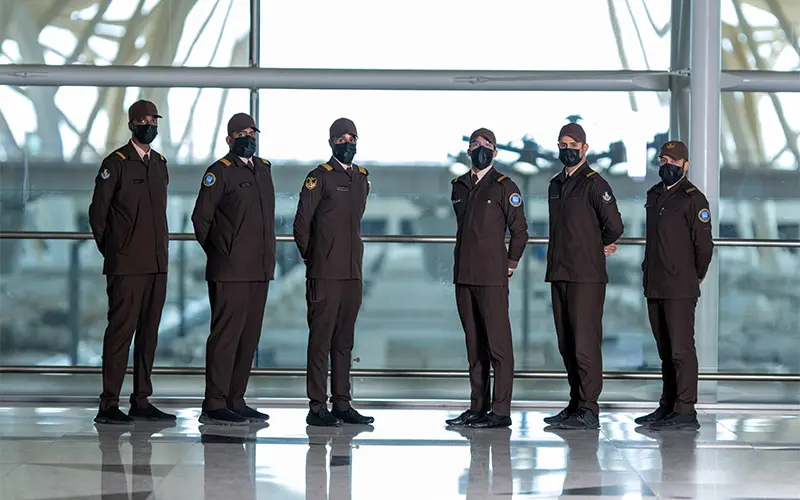
Qimah Security Guards is a licensed security guarding company holding an HCIS Category One guarding licence, a registered supplier to Saudi Aramco and NEOM, and covers more than 25 cities including Riyadh, Jubail, Yanbu and Dammam.
Frequently Asked Questions About Perimeter Security
Are a fence and cameras enough without security guards
For most commercial and industrial sites it is not. A fence delays an intruder and a camera records them, but nobody stops them, checks the alert or calls the authorities in time. A guard in the control room and another on patrol turn a recording into a real response, and they spot faults and openings before anyone can exploit them.
How often should a guard patrol the fence during a shift
No single number suits every site, because it depends on the length of the perimeter, the value of the assets and the incident history. The key rule is to set a minimum number of circuits per shift, vary their timing so they cannot be predicted, cover every section of the fence in each circuit and scan checkpoints to prove each patrol took place.
Do security guard companies install fences and cameras
Qimah Security Guards does not supply fences or install cameras, sensors or alarm systems, which is work for specialist systems contractors. The Qimah role is to run the perimeter once it is in place, with guards at the gates, patrols along the fence and trained guards watching the client cameras in the on-site control room and checking alerts in person.
What are the security requirements for industrial facilities in Saudi Arabia
Facilities under HCIS supervision must follow its security directives, which cover topics such as fencing, gates, security lighting and integrated systems, with design handled by an HCIS approved consultant. The guarding company that runs the site must also be licensed. The technical detail for each facility is set by HCIS and its consultant according to the required protection level.
What should a guard do on finding a gap in the fence
The guard records the gap with its location, time and photos where site rules allow, reports it to the supervisor and control room straight away, and stays near it or requests a temporary post until it is repaired. If there are signs of recent entry, the guard calls the police on 911 and protects the scene without touching evidence, and the spot is added to the patrol route more often.
Related Reading
- layers of security in building protection
- mobile security patrol services
- access control and gate management
- industrial facility security guards
- security risk assessment and site survey
- security guards in Jubail
Request a Site Visit for Your Perimeter
The Qimah Security Guards team visits your site in Riyadh, Jubail, Yanbu or any city we cover, studies the fence, gates and lighting, then proposes a written guarding and patrol plan. Call or WhatsApp +966 53 426 1698 or request a quote.