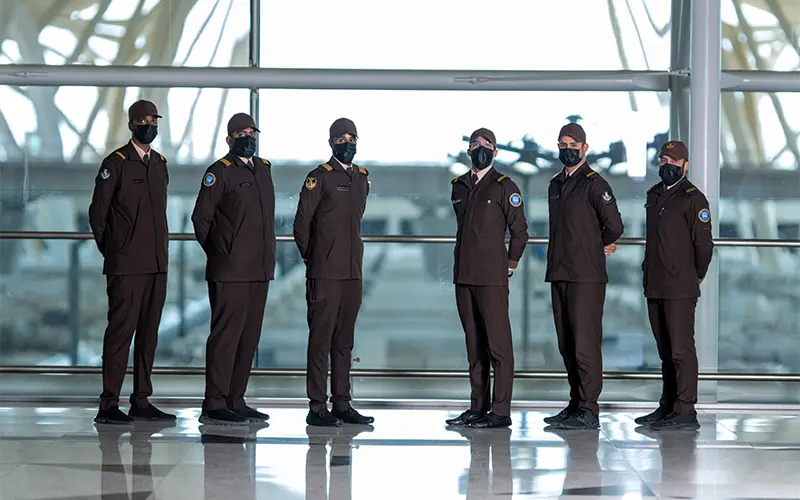
لا يُختار مظهر حارس الأمن صدفةً أو بناءً على التقاليد. فكل قطعة يرتديها تُختار بعناية لتؤدي وظيفة محددة، سواءً كانت التعريف، أو الردع، أو التواصل، أو الحماية، أو حتى لمجرد الاستخدام العملي. وفهم هذه الوظائف يُفسر أهمية معايير المظهر الاحترافي، وما يُشير إليه عدم الالتزام بها.
قميص أو سترة الزي الرسمي
يرتكز الزي الرسمي على القميص أو السترة المصممة بشكل منظم والتي تحمل اسم الشركة وشعارها. وهو يخدم غرضين في آن واحد.
أولها هو التعريف الفوري. يحتاج أي شخص يقترب من موقع ما إلى معرفة هوية مسؤول الأمن فورًا دون الحاجة إلى سؤاله. يزيل الحارس ذو الزي الرسمي هذا الغموض قبل بدء أي تفاعل. في ردهة مزدحمة، أو فعالية مكتظة، أو حالة طوارئ، يُعد هذا الأمر بالغ الأهمية.
أما العامل الثاني فهو الردع. فوجود حارس أمن واضح المعالم، يرتدي زياً مهنياً، يُغيّر حسابات المخاطر لدى أي شخص يُفكّر في القيام بسلوك غير مُصرّح به. هذه الإشارة سلبية ومستمرة، إذ تعمل طوال كل دقيقة من نوبة العمل دون أي جهد فعلي من الحارس.
يختلف التصميم المحدد - من حيث اللون وموضع الشعار ونوع القماش - باختلاف الشركة وبيئة الاستخدام. تميل بيئات الشركات إلى تقديم عروض أكثر أناقة ورسمية. أما بيئات الاستخدام الصناعية والخارجية فتعطي الأولوية للمتانة والوظائف العملية. لكن الغرض الأساسي يبقى واحداً في جميعها.
البناطيل والأحذية
يتضمن العمل الأمني الوقوف والمشي والدوريات، وأحيانًا التحرك بسرعة. تُصنع سراويل الزي الرسمي من مواد تُوازن بين المظهر الاحترافي والمتطلبات البدنية للوظيفة - فهي متينة بما يكفي لتحمل نوبة عمل كاملة من الأنشطة المتنوعة، وأنيقة بما يكفي للظهور بمظهر لائق في البيئات المهنية.
غالباً ما يُغفل عن الأحذية كعنصر من عناصر الزي الرسمي، مع أنها ذات أهمية بالغة. يقضي الحراس ساعات طويلة متواصلة واقفين على أسطح متنوعة. توفر أحذية الأمن المناسبة الدعم والثبات الكافيين للنشاط البدني المتواصل دون التسبب في الإرهاق وعدم الراحة اللذين يؤثران سلباً على الأداء خلال نوبة عمل طويلة. في مناخ المملكة العربية السعودية، تُعدّ المواد التي تُساعد على تنظيم الحرارة والتهوية من الاعتبارات الإضافية المهمة للعمليات الخارجية.
الشارة
تُعدّ الشارة من أكثر العناصر التي تحمل وظائف متعددة والتي يرتديها الحارس. فهي تعرض اسم الحارس أو رقم هويته، ومسمى وظيفته، والشركة التي يمثلها.
تؤكد الشارة أن هذا الشخص محترف مرخص ومعتمد، وليس فرداً يدّعي السلطة دون مؤهلات. وفي عمليات نشر شركات الأمن المرخصة من وزارة الداخلية في المملكة العربية السعودية، تُعدّ الشارة جزءاً من كيفية إظهار الامتثال المهني للجمهور.
كما أنها تعزز المساءلة. فعندما يكون بالإمكان التعرف على الحارس بالاسم أو الهوية، يصبح كل تفاعل له قابلاً للتتبع. وتؤثر هذه المساءلة على السلوك، فالحراس الذين يعرفون هويتهم يكونون أكثر احترافية ووعياً من أولئك الذين يعملون بشكل مجهول.
يجب ارتداء الشارة بشكل واضح طوال فترة الانتشار. الشارة الموضوعة داخل السترة لا تؤدي أيًا من وظائفها.
حزام الأدوات
حزام الأدوات هو بمثابة حقيبة أدوات الحارس التشغيلية. فهو يُبقي المعدات الأساسية في متناول اليد دون أن يُسبب ازدحامًا في الزي الرسمي أو يُعيق الحركة. يحتوي حزام الأدوات الأمني القياسي على ما يلي:
جهاز لاسلكي ثنائي الاتجاه. التواصل مع المشرفين وغرف التحكم والزملاء ليس خياراً، بل هو الآلية التي من خلالها يستدعي الحارس الدعم، ويبلغ عن الحوادث، ويبقى على اتصال بالعملية الأمنية الأوسع. الحارس الذي لا يستطيع الوصول إلى مشرفه بسرعة يُصبح معزولاً عملياً.
شعلة. يُعدّ المصباح اليدوي ضروريًا لأي مهمة تتطلب العمل في بيئات ذات إضاءة خافتة، أو نوبات عمل ليلية، أو تفتيش المناطق غير المضاءة أثناء الدوريات. إن تعطل مصباح يدوي عالي الجودة أثناء نوبة العمل يُشكّل خطرًا على السلامة والعمليات.
دفتر وقلم. أداة توثيق خاصة بالحارس لتسجيل الملاحظات الميدانية، وتفاصيل الزوار، وملاحظات الحوادث. تتمتع الوثائق الورقية بقوة قانونية، وتُنشئ سجلاً معاصراً لا يمكن الطعن فيه لاحقاً.
أدوات الوصول. المفاتيح أو بطاقات الوصول أو بيانات الاعتماد الخاصة بالموقع مطلوبة للنشر.
أصفاد لا تُحمل هذه المعدات إلا في الحالات التي يسمح فيها الانتشار تحديدًا باستخدامها، وبعد أن يكون الحارس قد تلقى التدريب المناسب. وهي ليست معدات قياسية في جميع عمليات الانتشار.
نظارات شمسية
في المملكة العربية السعودية، تُعدّ النظارات الشمسية من المعدات المهنية الأساسية في العمل الميداني. فمستويات الأشعة فوق البنفسجية المرتفعة في المملكة، بالإضافة إلى الوهج المنعكس من الأسطح الزجاجية والحجرية، تجعل العمل المطوّل في الهواء الطلق دون حماية للعينين مشكلة حقيقية في الأداء، إذ يتفاقم إجهاد العين مع مرور الوقت، مما يُضعف اليقظة وسرعة رد الفعل.
تم تصميم نظارات الأمان الاحترافية لأغراض وظيفية، وليس للموضة: فهي توفر حماية من الأشعة فوق البنفسجية 400، وعدسات مستقطبة تقلل من الوهج المنعكس، وهيكل من البولي كربونات المقاوم للصدمات، وإطارات محكمة توفر بعض الحماية من الغبار والرمال الشائعة في البيئات الخارجية في المملكة العربية السعودية.
وهناك أيضاً بُعد تكتيكي. فعندما لا تكون عيون الحارس مرئية، لا يستطيع الأشخاص المستهدفون تتبع وجهة نظره. وهذا أمر بالغ الأهمية في الأماكن المزدحمة.
النظارات الشمسية من معدات الاستخدام الخارجي. يقوم الحراس المحترفون بخلعها عند دخول المباني وعند إجراء محادثات شخصية مباشرة.
عناصر عالية الوضوح
بالنسبة للحراس العاملين في البيئات الخارجية، بالقرب من حركة مرور المركبات، أثناء الدوريات المتنقلة، أو في أي بيئة ذات إضاءة منخفضة، تُعدّ الشرائط أو السترات عالية الوضوح من الإضافات الأساسية. وهي تخدم غرضين: السلامة (جعل الحارس مرئيًا للسائقين وغيرهم من الأفراد) والردع (يكون الوجود الأمني المرئي أكثر فعالية عندما يكون مرئيًا بوضوح).
الصورة الكاملة: الاتساق مهم بقدر أهمية العناصر الفردية
لكل قطعة وظيفتها الخاصة، لكن قيمة الزي الكامل، الذي يُرتدى باستمرار ويُحافظ عليه جيدًا، تفوق مجموع أجزائه. يُظهر فريق الأمن المتماسك والمحترف صورةً عن أمن منظم، خاضع للإشراف، ومسؤول. أما عدم الاتساق - كفقدان الشارات، أو خلط قطع الزي، أو إضافة عناصر غير قياسية - فيُضعف هذه الصورة، وعادةً ما يكون مؤشرًا واضحًا على وجود مشاكل جودة أوسع لدى الجهة المُقدِّمة للخدمة.
عند تقييم شركة أمنية، فإن كيفية ظهور حراسها تعتبر واحدة من أسرع عمليات تقييم الجودة المتاحة قبل طلب أي وثائق.
الأسئلة الشائعة
لماذا يحتاج حراس الأمن إلى جهاز اتصال لاسلكي ثنائي الاتجاه في حين أن لديهم هواتف محمولة؟
توفر أجهزة الراديو اتصالاً فورياً وبدون استخدام اليدين عبر قنوات مخصصة لا تعتمد على تغطية شبكة الهاتف المحمول. في المباني الكبيرة، أو الأقبية، أو المناطق الخارجية النائية حيث تكون إشارات الهاتف المحمول ضعيفة، يظل الراديو فعالاً. كما أنها تتيح التواصل الفوري بين أعضاء الفريق دون الحاجة إلى خطوات الاتصال والانتظار.
هل يرتدي حراس الأمن في المملكة العربية السعودية نفس الزي دائماً؟
تختلف عناصر الزي الرسمي المحددة باختلاف بيئة العمل والفصل. فقد يرتدي حراس الشركات في الأماكن المغلقة سترة أكثر رسمية، بينما قد يرتدي حراس المصانع في الأماكن المفتوحة ملابس مصنوعة من مواد مناسبة للظروف المناخية. لكن العناصر الأساسية - قميص يحمل شعار الشركة، وشارة ظاهرة، وحزام متعدد الاستخدامات - تبقى ثابتة في جميع عمليات الحراسة المهنية.
ماذا يعني عدم ظهور شارة حارس الأمن؟
إنّ وجود حارس أمن بدون شارة تعريف ظاهرة لا يفي بالمعايير المهنية. هذه مسألة تتعلق بالامتثال، ومن حق العملاء تمامًا إبلاغ شركة الأمن بها. تُعدّ رؤية شارة التعريف بشكل دائم من أبسط مؤشرات الجودة وأكثرها وضوحًا.
هل يُسمح لحراس الأمن باختيار أحذيتهم بأنفسهم؟
في العمليات المهنية، تُعدّ مواصفات الأحذية عادةً جزءًا من سياسة الزي الرسمي للشركة. لا يختار الحراس أحذيتهم بناءً على تفضيلاتهم الشخصية، بل يجب أن تستوفي متطلبات السلامة والمظهر التي يحددها صاحب العمل.
لماذا يرتدي بعض حراس الأمن سترات واقية من الرصاص؟
تُستخدم الدروع الواقية للبدن في العمليات عالية الخطورة حيث يبرر تقييم المخاطر استخدامها تحديدًا، وليس كمعدات أمنية تجارية قياسية. فهي تُضيف طبقة حماية مادية في البيئات التي يواجه فيها الحارس خطرًا حقيقيًا ومتزايدًا للتعرض لهجوم جسدي.
الاستنتاجات النهائية
إن ما يرتديه حارس الأمن هو نظام مدروس وعملي، وليس مجرد خيار جمالي. فمن الشارة التي تضمن المساءلة إلى جهاز اللاسلكي الذي يتيح التواصل، ومن حزام الأدوات الذي يسهل الوصول إلى الأدوات إلى النظارات الشمسية التي تحمي من أشعة الشمس الحارقة في المملكة العربية السعودية، يساهم كل عنصر في قدرة الحارس على أداء وظيفته بكفاءة.
بالنسبة للشركات التي تقيّم مزودي خدمات الأمن، تُعدّ المعايير الموحدة مؤشراً مبكراً سهلاً وموثوقاً للجودة الشاملة. فالشركة التي تُتقن الأساسيات بشكل واضح، يُرجّح أن تُتقنها أيضاً على أرض الواقع.