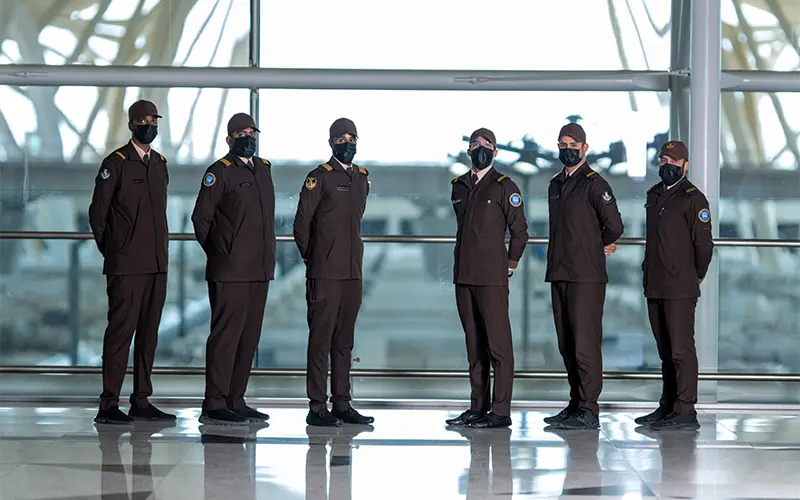
تُثار ثلاثة أسئلة متكررة حول صلاحيات حراس الأمن، غالباً في سياق الحديث عن صلاحياتهم وحدودها. يكشف كل سؤال منها عن جانب مختلف من هيكلية سلطة الأمن الخاص في المملكة العربية السعودية، وتوجد إجابات أوضح من المتوقع.
للمزيد من التفاصيل، راجع صلاحيات حراس الأمن غير المسلحين، وكيف تُطبق في أمن التجزئة ومراكز التسوقومعاييرنا الخاصة بـ الحراس الأمنيين المرخصين.
هل يمكن لحراس الأمن التحقق من هويتك؟
نعم — ولكن مع شرط هام يتعلق بالمكان.
في الأماكن الخاصة الخاضعة للرقابة على الدخول، يعمل حارس الأمن كوكيل لمالك العقار. ويُعد طلب إثبات الهوية ممارسةً لحق مالك العقار في تحديد من يُسمح له بالدخول وشروطه. ويحق للحارس أن يطلب منك إبراز هويتك كشرط للدخول. وفي حال رفضك، قد يُمنع دخولك. لا يُجبرك الحارس على إبراز هويتك، بل يُطبق شرطًا للدخول لك الخيار في قبوله أو رفضه.
هذه السلطة مُرتبطة بالملكية، وليست عامة. فالحارس الذي يقف خارج مبنى خاص في مكان عام، أو الذي يوقف شخصًا في مكان عام، ليس لديه أي سلطة قانونية لإجباره على إبراز هويته. بإمكانه أن يطلبها، وبإمكانك رفضها. هذا التمييز مهم.
في الممارسة العملية في المباني التجارية السعودية. تتضمن إدارة الزوار في المكاتب المؤسسية، وبوابات المجمعات، ومداخل المستشفيات، وأماكن الفعاليات عادةً التحقق من الهوية كشرط أساسي للدخول. يقوم الحراس بتسجيل بيانات الزوار، والاحتفاظ بنسخ منها إذا كان ذلك جزءًا من سياسة المنشأة، وفي بعض المرافق يُطلب فحص تسجيل المركبات عند الدخول.
تختلف أنواع بطاقات الهوية المقبولة باختلاف المنشأة، فقد تُقبل بطاقة الهوية الوطنية، أو الإقامة، أو جواز السفر، أو بطاقة اعتماد الشركة، أو وثيقة تفويض المقاول، وذلك حسب سياسة المنشأة. ينبغي على الحراس توضيح المتطلبات بوضوح قبل أن يبدأ الزوار إجراءات التحقق.
ما لا يستطيع الحراس فعله باستخدام الهوية. إن استخدام رقم الهوية أو المعلومات الشخصية التي تم الحصول عليها لأي غرض يتجاوز إدارة الوصول ليس من ضمن صلاحيات الحارس. تُستخدم هذه المعلومات للتحكم في الوصول، وليست أداة تحقيق عامة.
هل يُسمح لحراس الأمن بلمسك؟
هذا هو السؤال الأكثر حساسية من الناحية القانونية من بين الأسئلة الثلاثة، والإجابة عليه أضيق مما يفترضه الكثير من الناس.
تُبنى ممارسات الأمن الاحترافية على حلّ المواقف دون اللجوء إلى العنف الجسدي. فالتدريب والإجراءات وثقافة عمليات الأمن الاحترافية تُعطي الأولوية للتواصل اللفظي، وتهدئة الموقف، وطلب الدعم، بدلاً من التدخل الجسدي. ويتم حلّ معظم الحوادث الأمنية في البيئات التجارية بالكامل دون أي احتكاك جسدي.
متى يكون الاتصال الجسدي مصرحاً به قانوناً:
ينطبق هنا نفس الإطار الذي يحكم استخدام القوة في جميع سياقات الأمن الخاص. يجوز للحارس استخدام الاتصال الجسدي في ثلاث حالات: للدفاع عن نفسه من هجوم جسدي وشيك؛ للدفاع عن شخص آخر من أذى جسدي وشيك عندما لا تتوفر أي وسيلة أخرى للوقاية؛ ولمنع شخص من الهروب من احتجاز قانوني من قبل مواطن يحاول الفرار بنشاط.
في الحالات الثلاث جميعها، يجب أن يكون استخدام القوة متناسباً مع التهديد المحدد في تلك اللحظة. إن الاستمرار في استخدام القوة بعد زوال التهديد، أو استخدام قوة أكبر مما يتطلبه الموقف، يُرتب مسؤولية قانونية شخصية على الحارس.
ما هي أنواع الاتصال الجسدي غير المسموح بها؟
إجبار شخص على التفتيش بعد رفضه الموافقة. الإمساك بشخص أو دفعه أو التعامل معه جسديًا لمجرد أنه يُظهر صعوبة في التعامل ولكنه لا يُشكل تهديدًا جسديًا. إخراج شخص بالقوة من مكان ما لمجرد رفضه المغادرة دون أن يُشكل تهديدًا جسديًا - فهذا الموقف يستدعي تدخل الشرطة، وليس الحارس. أي تلامس يتجاوز ما هو متناسب مع تهديد جسدي محدد ومباشر.
البعد الثقافي في المملكة العربية السعودية. يُضفي السياق الثقافي للمملكة العربية السعودية حساسية خاصة فيما يتعلق بالاتصال الجسدي بين أفراد غير مرتبطين من جنسين مختلفين. لذا، تُدرّب شركات الأمن المحترفة حراسها على هذه الاعتبارات، وتُنظّم عمليات الانتشار لضمان وجود أفراد مناسبين من الجنسين في الحالات التي قد تتطلب تفاعلاً جسدياً.
هل يستطيع حراس الأمن العمل بمفردهم ليلاً؟
الجواب القانوني: نعم. لا يوجد في لوائح الأمن الخاص في المملكة العربية السعودية ما يمنع عمليات الانتشار الليلي الفردية.
الإجابة العملية: الأمر يعتمد كلياً على الموقع المحدد.
يُعدّ نشر حارس واحد ليلاً أمراً شائعاً ومناسباً تماماً في كثير من الأحيان. فالمكاتب الصغيرة للشركات التي تُخلى في الساعة السادسة مساءً، والتي تتميز بمدخل واحد مُراقب وأقل قدر من المخاطر على الأصول خلال الليل، تُناسب تماماً وجود حارس محترف واحد يتمتع ببنية تحتية جيدة للاتصالات وإشراف فعال.
حيث يُشكّل الانتشار الليلي الفردي خطراً حقيقياً:
لا يمكن لشخص واحد مراقبة المواقع الكبيرة ذات المداخل المتعددة والمحيطات الواسعة بكفاءة، بغض النظر عن وقت نوبته. في البيئات عالية الخطورة، حيث يرتفع احتمال وقوع مواجهات، لا ينبغي وضع الحارس في موقف لا يتوفر فيه دعم فوري. تشكل المواقع ذات المخاطر المادية - كالتضاريس الوعرة والآلات الثقيلة والأماكن الضيقة - مخاطر على سلامة الحارس الذي يعمل بمفرده دون زملاء يلاحظون أي خلل.
ما الذي يجعل عملية الانتشار الليلي الفردي ناجحة؟
إن العامل الحاسم بين انتشار فردي فعال وبين خطر يهدد السلامة والأمن لا يكمن فقط في حجم الموقع، بل في البنية التحتية الداعمة. فالحارس الذي يعمل بمفرده ليلاً ولديه جهاز لاسلكي يعمل مع إمكانية اتصال موثوقة بالمشرف، وإجراءات تصعيد واضحة، وجدول زمني محدد لتسجيل الحضور، ومشرف يقوم بزيارات منتظمة غير معلنة للموقع، يختلف تماماً عن الحارس الذي لا يمكن الوصول إليه عملياً حتى الصباح.
ينبغي أن تكون أوامر العمل الخاصة بالانتشار الليلي الفردي أكثر تفصيلاً، لا أقل. يجب أن تغطي جميع أنواع المواقف التي قد يواجهها الحارس، مع توجيهات واضحة حول متى يجب الاتصال بالشرطة، ومتى يجب الاتصال بالمشرف، وما هي الإجراءات الفورية التي يجب اتخاذها في سيناريوهات تتراوح من انطلاق الإنذار إلى حالة طبية طارئة إلى دخول غير مصرح به.
الخيط المشترك
تشير الأسئلة الثلاثة جميعها إلى المبدأ الأساسي نفسه: سلطة حارس الأمن محددة، وسياقية، ومقيدة بالقانون والالتزام المهني. تُجدي عمليات التحقق من الهوية نفعًا لأن مالكي العقارات يستطيعون تحديد شروط الدخول. ولا يُسمح بالاتصال الجسدي إلا عند وجود تهديد جسدي محدد، وبما يتناسب معه. العمل الليلي الفردي قانوني، ولكنه يتطلب بنية تحتية داعمة لضمان السلامة والفعالية.
يساعد فهم هذه الحدود الشركات على كتابة أوامر ما بعد البيع بشكل أفضل، ووضع توقعات أوضح، وتجنب المصادر الأكثر شيوعًا للمسؤولية الأمنية - والتي لا تنشأ من قلة السلطة الأمنية ولكن من توجيه الحراس أو تحفيزهم على التصرف بما يتجاوز حدود ما يحملونه فعليًا.
الأسئلة الشائعة
هل يحق لحارس الأمن عند بوابة المجمع أن يرفض دخولي إذا لم أُظهر هويتي؟
نعم. في الأماكن الخاصة التي يُشترط فيها إبراز الهوية للدخول، يقوم الحارس بإنفاذ حق مالك العقار في التحكم بالدخول. رفض إبراز الهوية يعني إمكانية منعك من الدخول. لا يستطيع الحارس إجبارك على إبراز الهوية، لكن بإمكانه منعك من الدخول بدونها.
ماذا أفعل إذا قام حارس أمن بالاتصال بي جسدياً دون مبرر قانوني؟
لا تلجأ إلى العنف الجسدي. دوّن بيانات الحارس - اسمه أو رقم شارة التعريف واسم الشركة. اتصل بالشرطة إذا كان السلوك يشكل اعتداءً. وثّق الظروف وقدّم شكوى رسمية إلى شركة الأمن. في الحالات الخطيرة، يمكن إشراك وزارة الداخلية.
كيف أعرف ما إذا كان حارس الليل المنفرد يحظى بالدعم الكافي؟
استفسر من شركة الأمن عن جدول تسجيل الحضور، وعدد زيارات المشرف، وبنية الاتصالات المتاحة للحارس، وإجراءات التصعيد في تعليمات العمل. سيجيبك مزود الخدمة الذي درس هذا الأمر جيدًا إجابةً محددة، بينما سيجيبك من لم يفعل ذلك إجابةً مبهمة.
هل يجوز لحارس الأمن الاحتفاظ بهويتي أثناء زيارتي لأحد الأماكن؟
في بعض المرافق، يُعدّ الاحتفاظ بنسخة من معلومات هوية الزائر ضمن سجل الزوار إجراءً معتاداً. ولا داعي للاحتفاظ بالوثيقة الأصلية لفترة طويلة، إذ يكفي تسجيل البيانات لأغراض إدارة الدخول.
هل من القانوني أن يعمل حارس الأمن في نوبة ليلية منفردة لمدة 12 ساعة في المملكة العربية السعودية؟
مع مراعاة متطلبات قانون العمل المتعلقة بساعات العمل وفترات الراحة، يُعدّ وجود حارس واحد لتغطية نوبة العمل الليلية قانونيًا. ويعتمد مدى ملاءمة ذلك على الموقع، ومستوى المخاطر، وأحكام الرعاية والإشراف المعمول بها. يحدد قانون العمل الحد الأقصى لساعات العمل القياسية، ويُلزم بدفع تعويض عن العمل الإضافي الذي يتجاوز هذه الحدود بغض النظر عن هيكل النوبات.
الاستنتاجات النهائية
يُسمح لحراس الأمن في المملكة العربية السعودية بالتحقق من الهويات عند نقاط الدخول الخاضعة للرقابة، واستخدام القوة الجسدية في ظروف محددة وضيقة وفقًا لقانون استخدام القوة المتناسبة، والعمل بمفردهم ليلًا إذا اقتضت طبيعة الموقع والبنية التحتية الداعمة ذلك. في كل حالة، تكون السلطة حقيقية ولكنها محدودة، وفهم هذه الحدود هو ما يميز بين تطبيق القانون بشكل سليم وبين تطبيقه بشكل يُنشئ المسؤولية التي كان من المفترض تجنبها.